Memory Care Activities: A Printable Monthly Calendar
Written for the activity coordinator in a memory care unit, who needs the calendar filled every month with things that actually run. The printables here are built for that job: one large print sheet per month and per holiday, free to photocopy in any quantity, answer key on page two of every PDF so staff have the solutions in the same folder.
Around the printables is the rest of a workable programme — group sessions, one-to-one time, and the things to keep in the cupboard — set out as a weekly rhythm rather than a list of a hundred ideas.
A printable for every month of the calendar
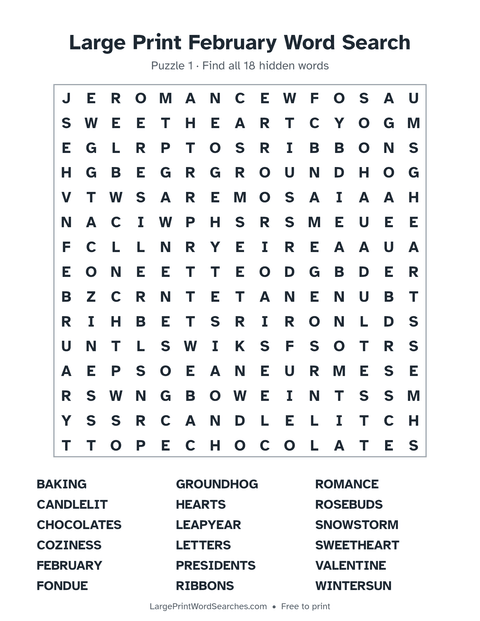
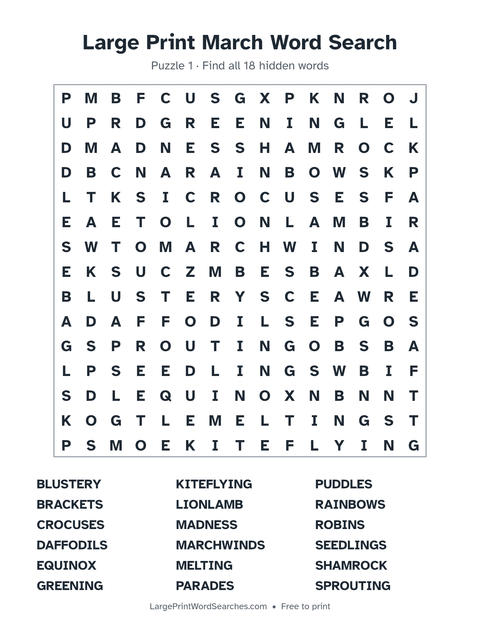
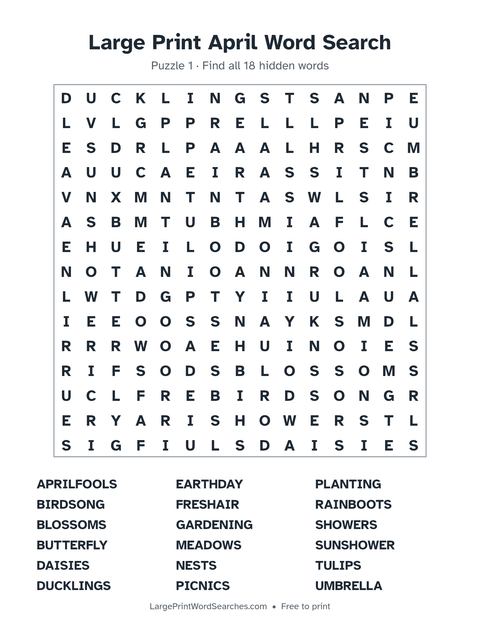
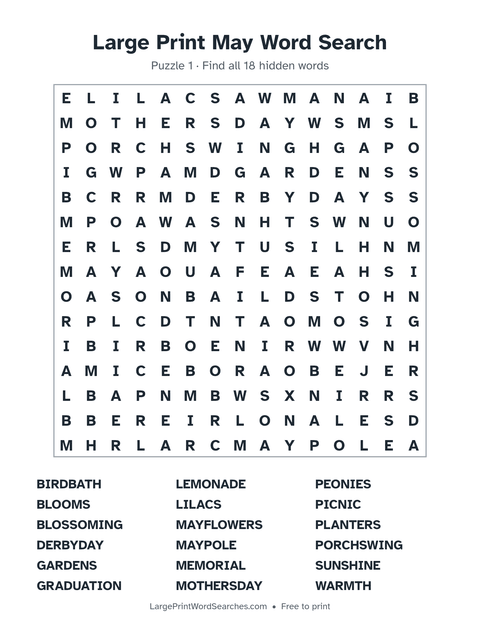
The month pages exist for exactly this. Each carries two puzzles of seasonal words in letters half an inch tall, so there is a fresh sheet every month and something current to talk about in the room. Print the coming month at the end of this one.
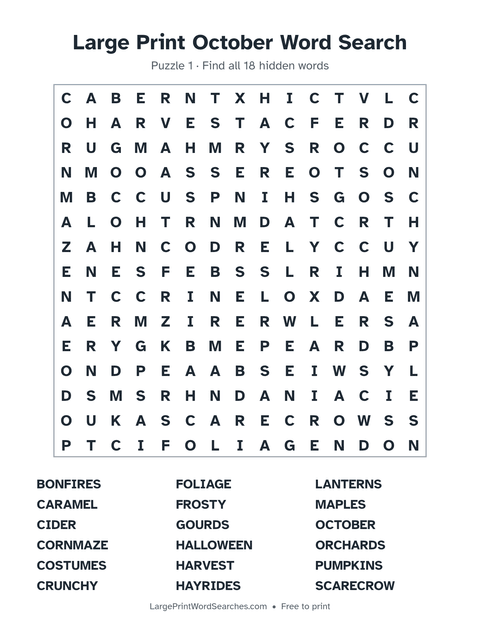
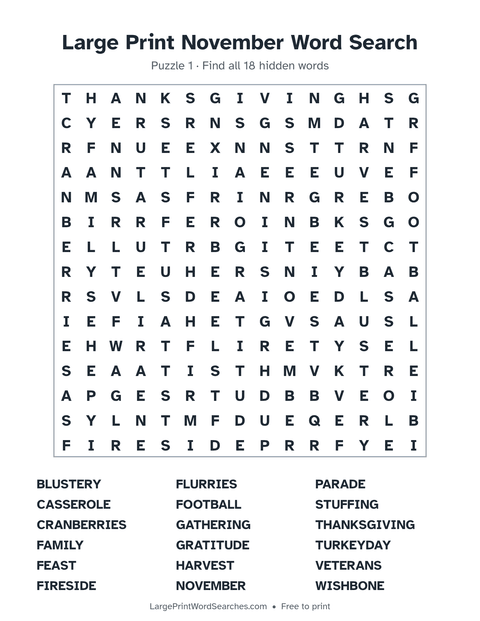
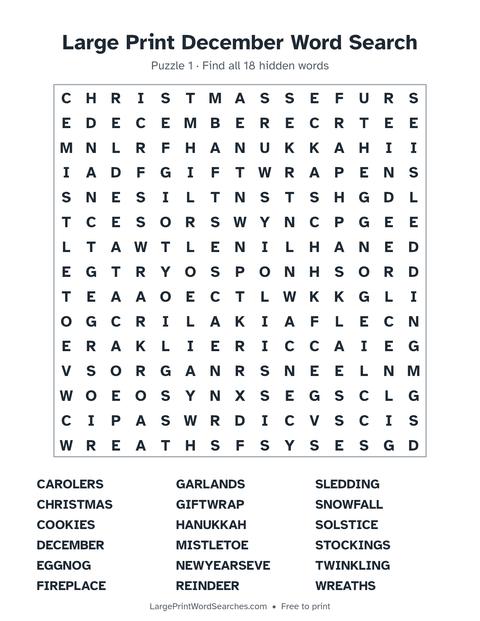
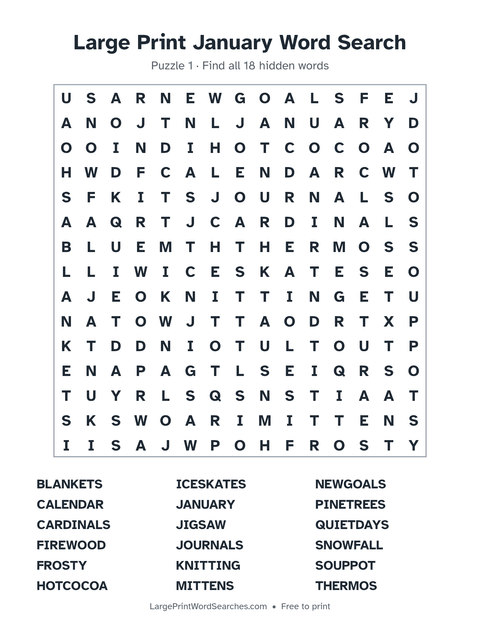
The big days on the calendar
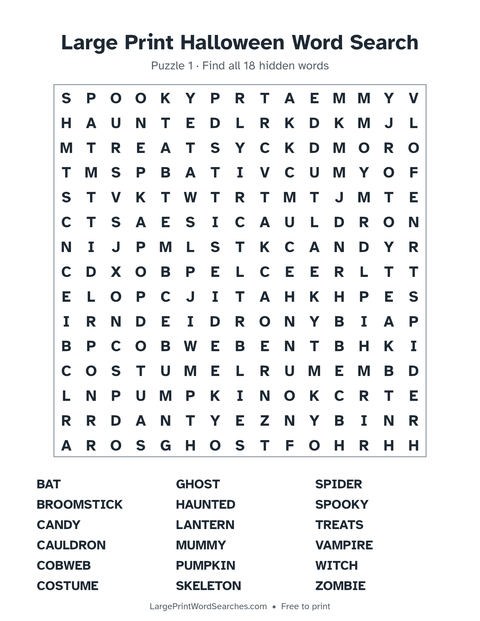
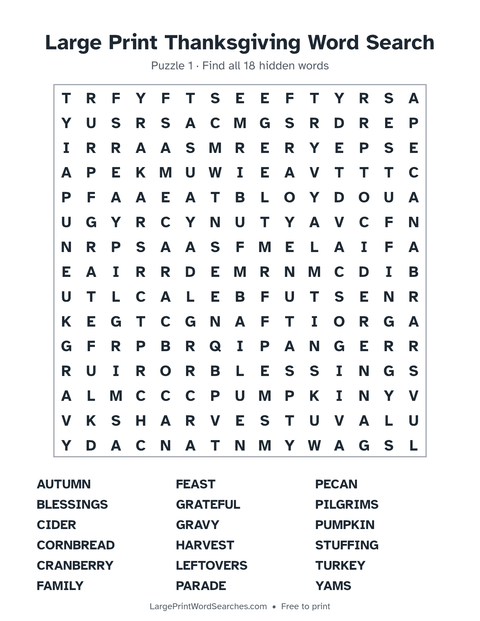
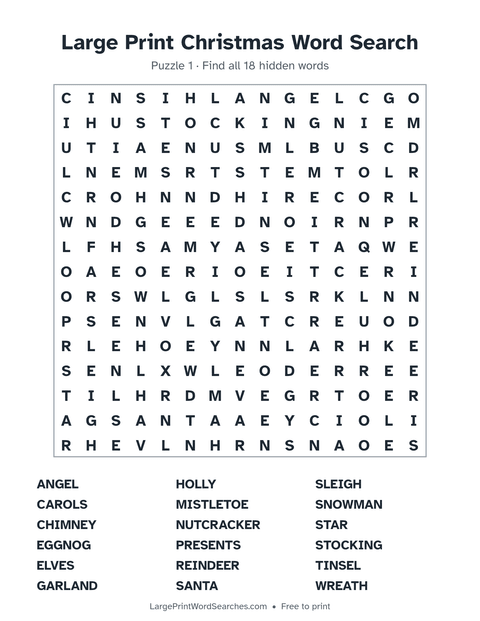
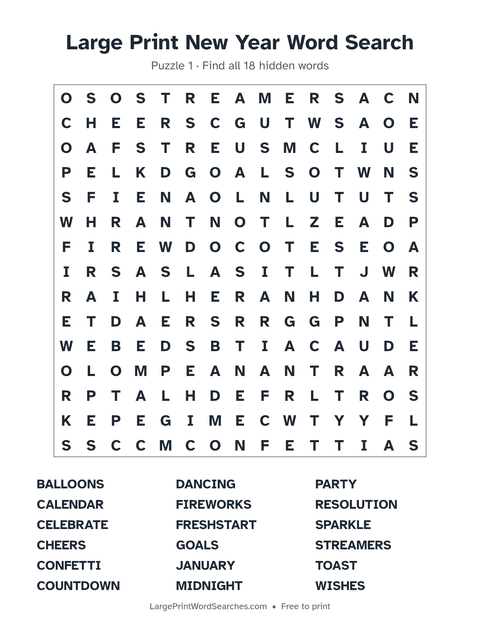
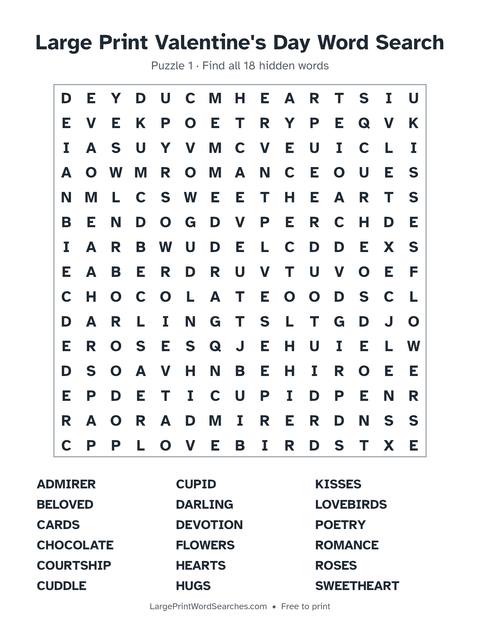
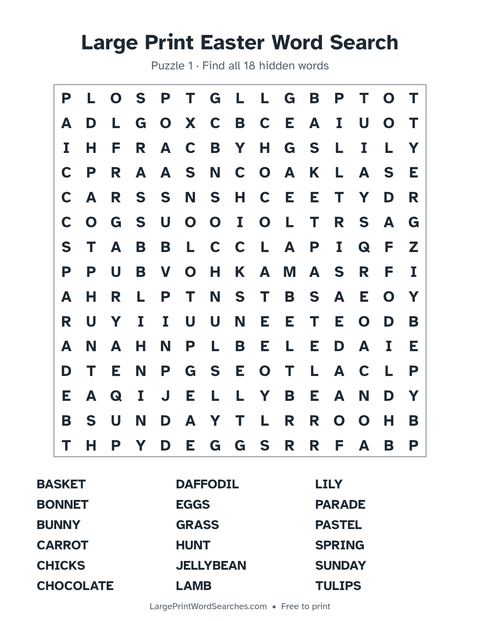
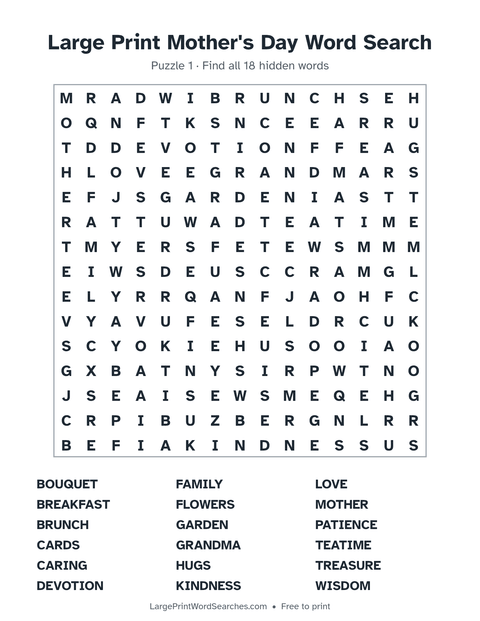
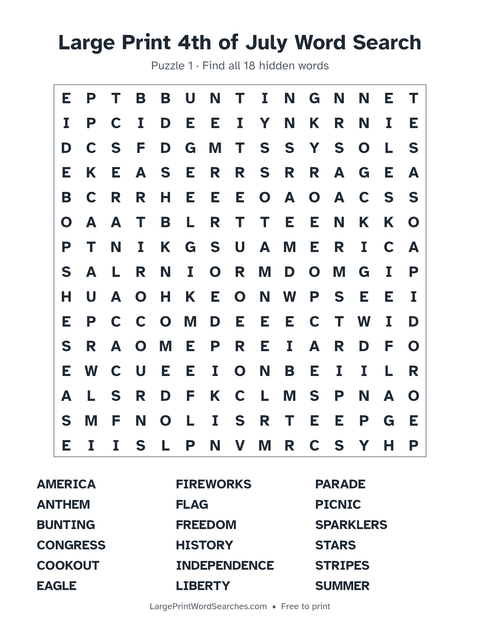
Holidays are where memory care calendars come alive, and they are also where the vocabulary is most deeply held — nobody forgets the words for Christmas. These sheets carry the holiday words in the same large print; every page now runs from a gentle 12×12 up to a tough 18×18, so a room of mixed eyesight can all be given something that suits.
A weekly rhythm that runs itself
The programmes that survive staff turnover are the ones with a shape the residents recognise. A simple version: a music session and a movement session each week on fixed days, one hands-on craft or kitchen activity, one reminiscence or discussion group, a puzzle table that is set up every morning without anyone deciding to set it up, and a weekly outing or garden session weather permitting.
Put the fixed things at fixed times and let the printables fill the gaps. The puzzle table, in particular, should be a permanent fixture: a stack of the current month's sheet, highlighters rather than pens, and the answer keys clipped to the back for staff. It costs nothing to run and it is the thing most residents will drift towards on their own.
Group sessions that work in memory care
Groups work when nobody can be wrong in front of anyone else. Sing-alongs from the residents' own era; a shared word search projected or done at a table with one caller reading the words; picture bingo; balloon volleyball; a reminiscence table with objects to handle rather than questions to answer. Six to eight people is the realistic ceiling for anything that needs attention.
Seasonal sessions are the easiest to fill and the most memorable — a Halloween word search alongside pumpkin handling in October, the Thanksgiving sheet with the smell of something baking in November, carols and the Christmas puzzle in December. The point of the seasonal sheet is not the puzzle; it is that the room is talking about the season.
One-to-one time, and the residents who do not join groups
Every unit has residents who will not come to a group and should not be made to. For them the activity is the visit: ten minutes with a sheet of familiar words — the kitchen, garden or hymns grids are the ones staff reach for — read aloud together, a few words found, and a conversation that came out of it.
In-room sheets should be the gentlest ones: the extra large print 10×10 grid and the easy across-and-down puzzles. Leave the sheet behind. A half-finished puzzle on a bedside table is picked up again far more often than a finished one is remembered.
What to keep in the cupboard
A ream of paper and toner, honestly first. Then highlighters, a dominoes set with large spots, large-print playing cards, a soft ball, a small speaker with playlists by decade, a box of textured objects for the reminiscence table, and a folder of the current month's printables with answer keys.
The games for dementia patients page goes through which physical games hold up over time; the free printable dementia activities page has the full set of familiar-words puzzles with notes on using them.
A straight word on outcomes
None of this slows dementia, and a good coordinator already knows it. A well-run programme produces calmer afternoons, better sleep, fewer incidents at the hard end of the day, and residents who are more themselves more of the time. Those are the outcomes worth measuring, and they are real.
Frequently asked questions
What activities are best for memory care residents?
Familiar, low-pressure activities with a clear shape: music from their own era, movement, hands-on tasks, reminiscence with objects, and large print puzzles built from long-held vocabulary. In practice, a fixed weekly rhythm matters more than the particular activity.
How do I fill a memory care activity calendar every month?
Anchor the week with fixed sessions — music, movement, a craft, a discussion group — then use a fresh seasonal printable each month and each holiday to fill the gaps. This site has a free large print word search for every month and major holiday, free to photocopy, with answer keys.
Are these activities free for care homes to use?
Yes. Every puzzle here is free to download, print and photocopy in any quantity, with no licence or sign-up. Memory care units, assisted living, day centres and memory cafés are all welcome.
What about residents who will not join group activities?
One-to-one time with a gentle printable — ten minutes with a familiar-words sheet, read aloud together — is a complete activity. Leave the sheet in the room afterwards; unfinished puzzles get picked up again.
Do memory care activities slow the progression of dementia?
No, and this page will not claim they do. What a good programme reliably delivers is calmer afternoons, better sleep and fewer difficult moments late in the day — outcomes that matter to residents and staff alike.