Activities for Dementia Patients
This is a working list, written for the person who is looking after someone at home and needs something for this afternoon. It covers the whole range — household tasks, music, reminiscence, getting outside, and the printable puzzles this site makes — and it is honest about which is which.
One thing up front: none of these activities treats dementia or slows it. What a good activity does is fill an hour well, with no risk of failure and no sense of being tested. That is the whole bar, and most of the ideas below clear it easily.
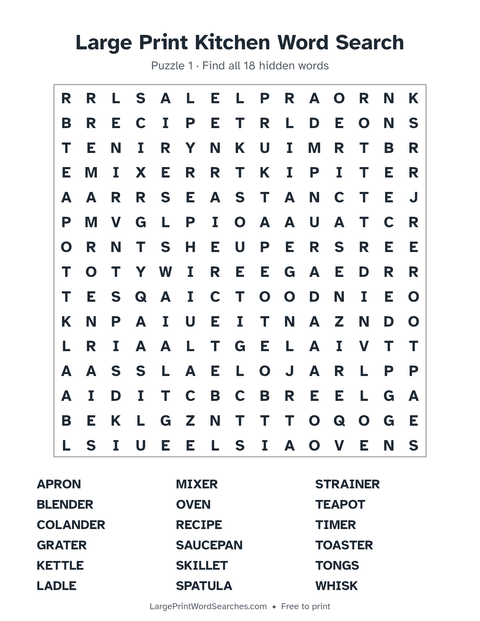
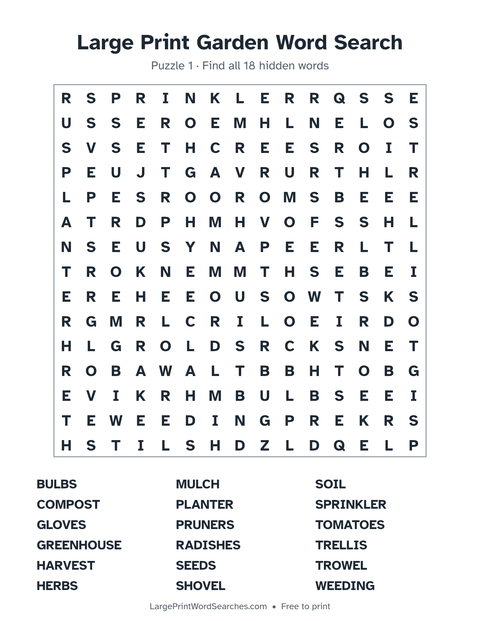
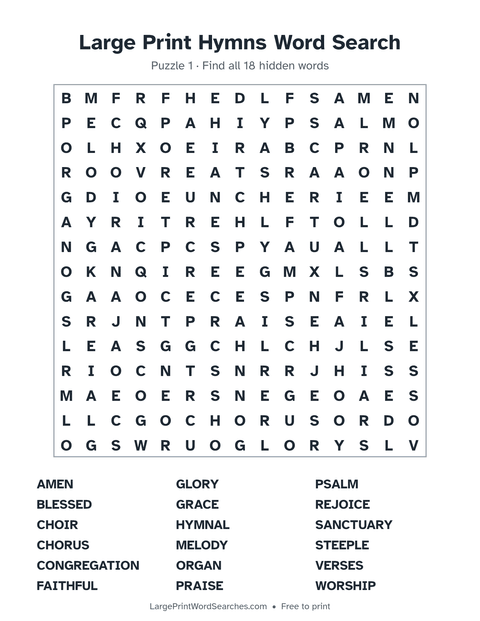
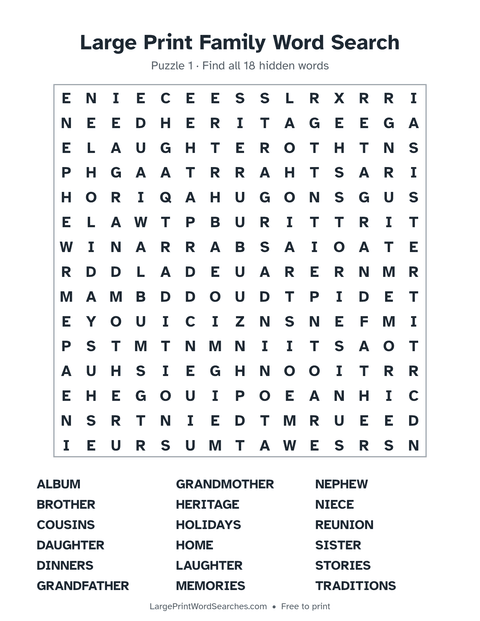
The printable part: word searches built from familiar words
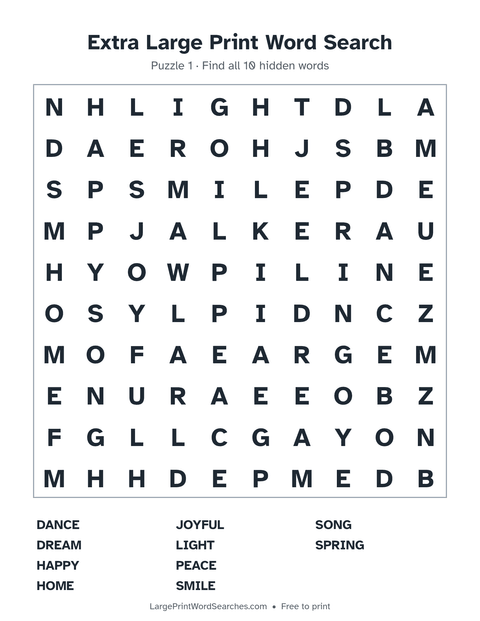
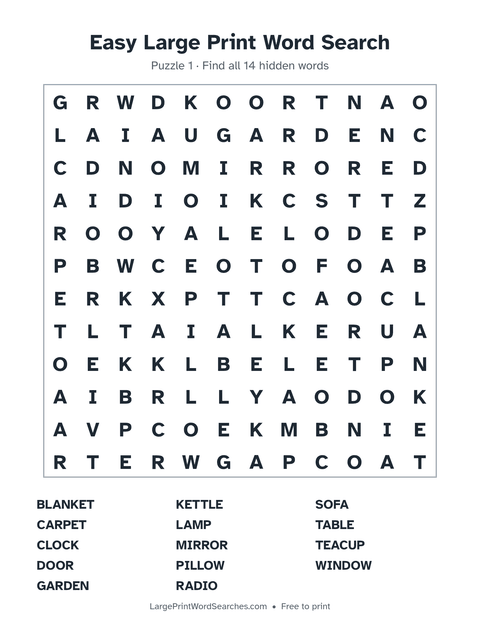
Where this site earns its place on the list. These grids use vocabulary a person has known for sixty years — kitchens, gardens, sewing, hymns — in letters half an inch tall. The full set, with notes on using them, is on the <a href="/free-printable-activities-for-dementia-patients/">free printable dementia activities</a> page; these four are the ones to start with.
When a standard puzzle is too much
Fewer letters on the page and words that only run across and down. These two are the gentlest grids on the site and are the right first print for anyone whose visual tracking has changed.
Everyday tasks that still make sense
The most reliable activities are usually the ones that were never called activities. Folding towels, pairing socks, polishing spoons, shelling peas, winding wool, sorting buttons by colour — these are familiar, have an obvious end, and carry a sense of being useful rather than being occupied. Set the task up so it can be done well: a basket of clean towels, not a pile that includes fitted sheets.
Kitchen work with the sharp parts removed works the same way. Stirring, buttering, laying the table, drying up. The point is participation in the ordinary rhythm of the house, and it matters more than the result.
Keep the steps to one or two. "Fold these" works. "Fold these, then put them in the airing cupboard, then bring me the blue ones" does not — not because the person cannot do each part, but because holding a sequence is exactly what has become hard.
Music, reminiscence and talking
Music from a person's late teens and twenties is retained astonishingly well and reaches people who have stopped responding to most other things. Make a short playlist from that decade and play it during a task rather than as a performance; singing along is common and is not something to be embarrassed about on either side.
Reminiscence is simply talking about the past with something to prompt it — a photograph, a wedding ring, a school word search, a tin of buttons. The rule is to ask about feelings and textures ("was your mother's kitchen warm?") rather than facts ("what year did you move?"), because the second kind of question is a test and the first is a conversation.
Reading aloud counts. A short poem, a letter, the word list from a puzzle. Being read to is a pleasure that does not require anything of the listener, which is precisely why it works on a hard day.
Outside, and moving
A walk to the end of the road and back, done daily, does more for sleep and mood than anything on this page. Weeding a single pot, filling a bird feeder, sweeping a step, hanging out washing — outdoor tasks are good because they are real, and because daylight helps with the late-afternoon restlessness that many carers know well.
Chair exercises, catching a soft ball, or simply a slow tour of the garden all count. Nothing needs to be strenuous. The aim is to move most days, not to improve at anything.
Games, puzzles and quiet things
Word searches, dominoes, large-piece jigsaws, matching pairs, bingo with a helper, snap. The things-you-play side of this list has its own page — games for dementia patients — which goes into which ones hold up as things change and how to adapt them.
Quiet things matter as much as busy ones: a soft blanket to fold and refold, a fidget cushion, a photo album, a window with a bird feeder outside it. A calm twenty minutes looking at something is not a failure to engage. It is an activity.
If you are looking after someone in a care setting rather than at home, the memory care activities page is written for that — group sessions, a monthly calendar, and what to have in the cupboard.
Matching the activity to the day
The same person will manage very different things on different days and at different hours. Late morning is usually the best window; late afternoon is often the worst. Plan the thing that matters for the good window and keep something effortless in reserve for the rest.
Stop while it is still going well. Twenty good minutes and a natural end beats forty minutes that peters out into frustration, and it makes the activity something to be picked up again tomorrow rather than avoided.
And drop anything that is not working without ceremony. There is no activity on this list that a person with dementia should be doing. There are only ones they might enjoy today.
Frequently asked questions
What are good activities for someone with dementia at home?
Familiar, finishable, low-pressure ones: folding laundry, simple kitchen tasks, music from their youth, looking through photographs, a short daily walk, and easy large print puzzles built from long-familiar words. The best activities were usually never called activities in the first place.
Do activities slow down dementia?
There is no good evidence that any everyday activity slows the progression of dementia, and this page is not going to claim otherwise. What activities reliably do is improve the day — mood, sleep, agitation, and the sense of being useful and included. That is a real benefit, and it is the honest one.
What activities should I avoid?
Anything with a right answer that can be got wrong in front of other people, anything with more than a couple of steps, and anything that relies on new learning. Quizzes, complicated board games and "brain training" apps tend to land as tests rather than pleasures. If in doubt, choose the simpler version.
How long should an activity last?
As long as it is going well, and no longer. Twenty minutes is typical. It is far better to stop early with a sense of having finished than to push on to the point of frustration — and an activity that ended well gets welcomed back tomorrow.
Are the printable puzzles on this site free?
Yes. Every large print word search and sudoku here is free to download, print and photocopy, with no sign-up. Every PDF carries its answer key as page two.