Free Printable Activities for Dementia Patients
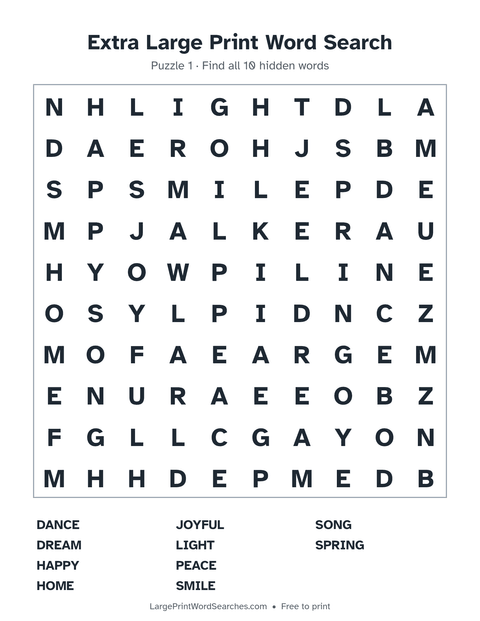
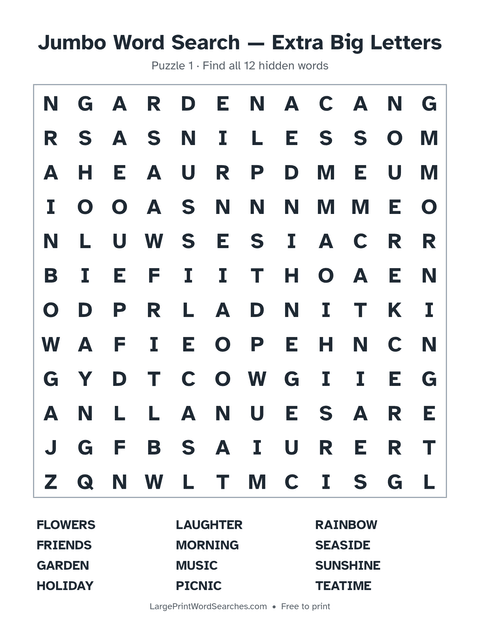
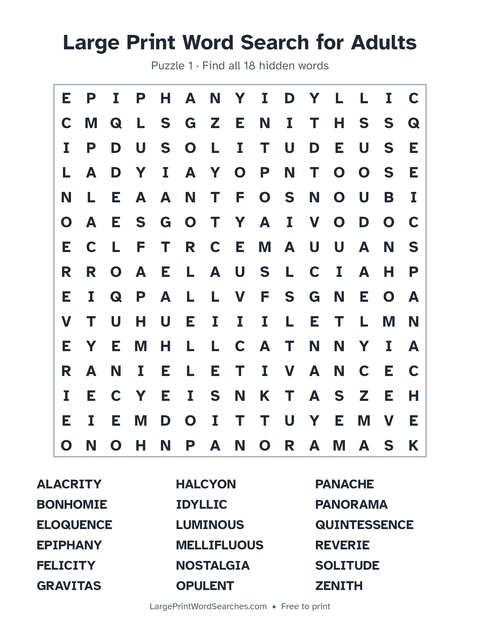
Everything on this page is free to print, free to photocopy and free of sign-ups. The puzzles are set in letters around half an inch tall, which matters more than it sounds: a person who can still read comfortably will keep going for twenty minutes, and a person squinting will put the page down in two.
A word of honesty about what these are. They are printable word searches, not a therapy programme. They are useful because they are calm, familiar and finishable — and because a carer can pull one out of a folder at four in the afternoon without setting anything up.
Start with the familiar-words puzzles
Vocabulary a person has known since childhood tends to stay available far longer than recently learned words. These puzzles are built from exactly that kind of language — kitchens, gardens, sewing, farms, hymns, school days. Someone who cannot recall this morning's breakfast will often find MIXINGBOWL without hesitating.
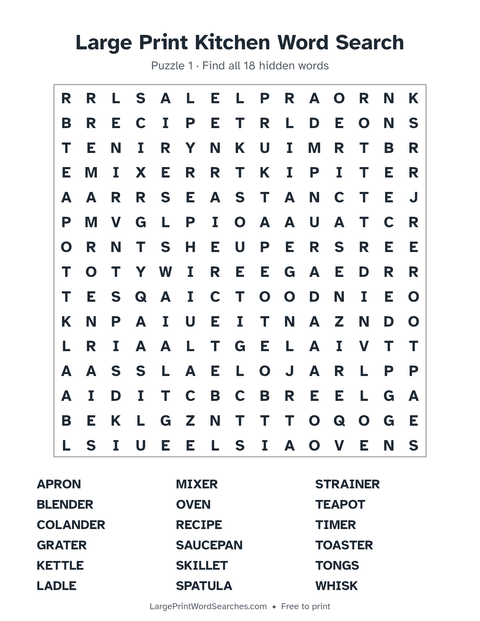
Large Print Kitchen Word Search
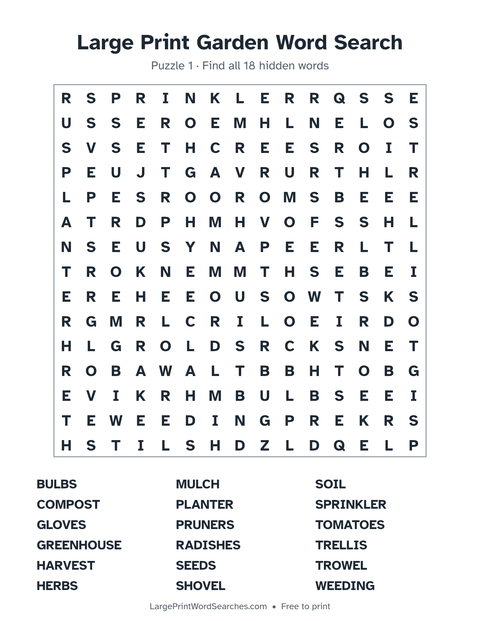
Large Print Garden Word Search
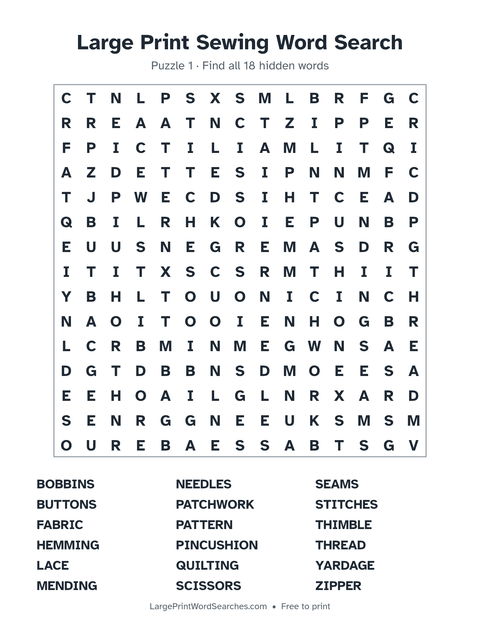
Large Print Sewing Word Search
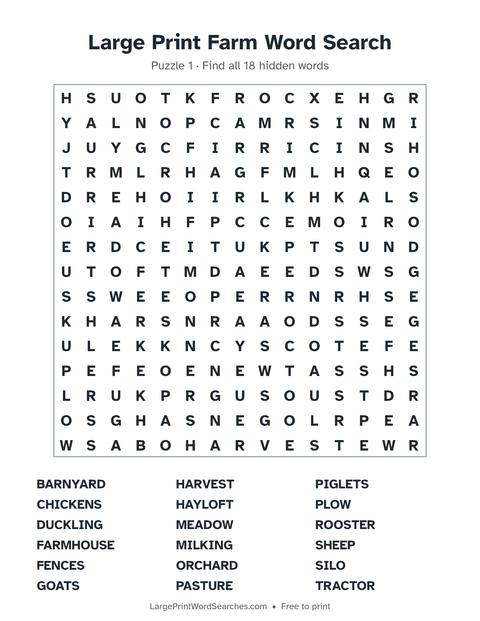
Large Print Farm Word Search
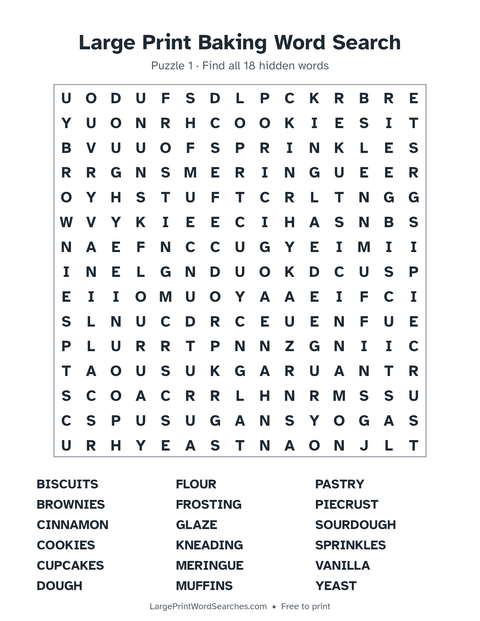
Large Print Baking Word Search
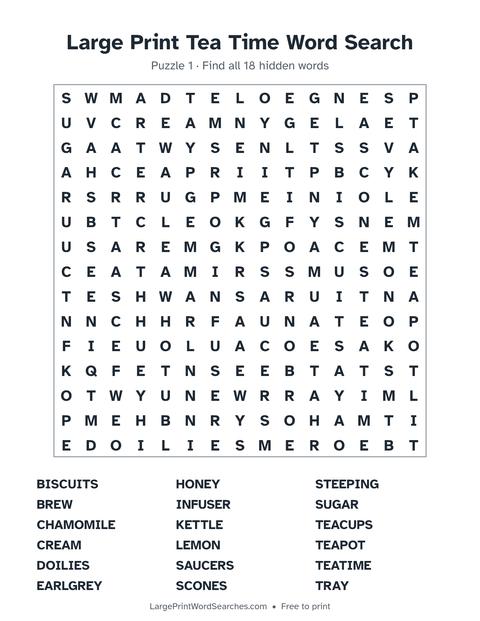
Large Print Tea Time Word Search
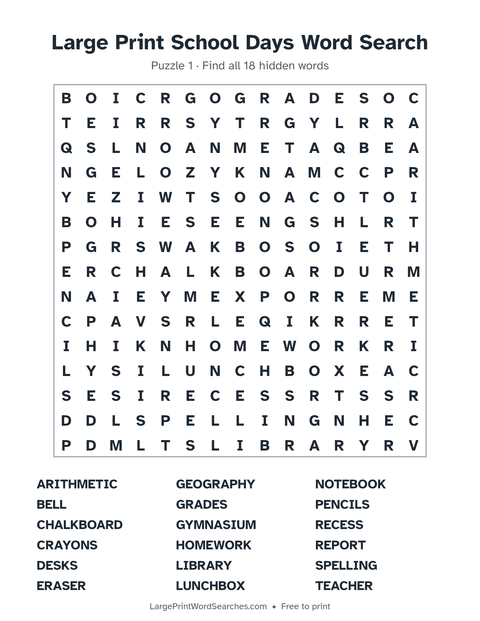
Large Print School Days Word Search
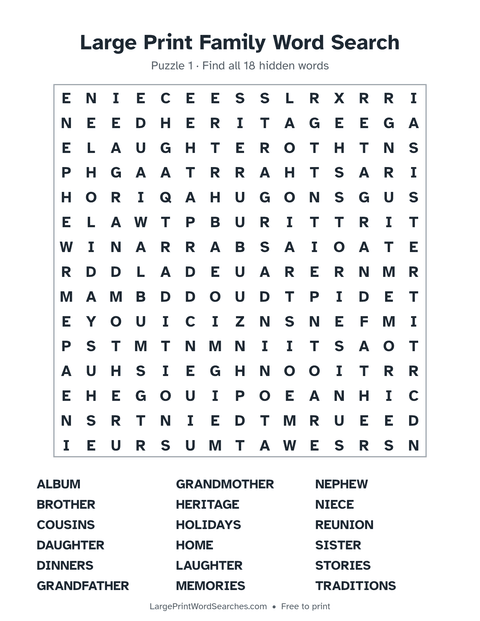
Large Print Family Word Search
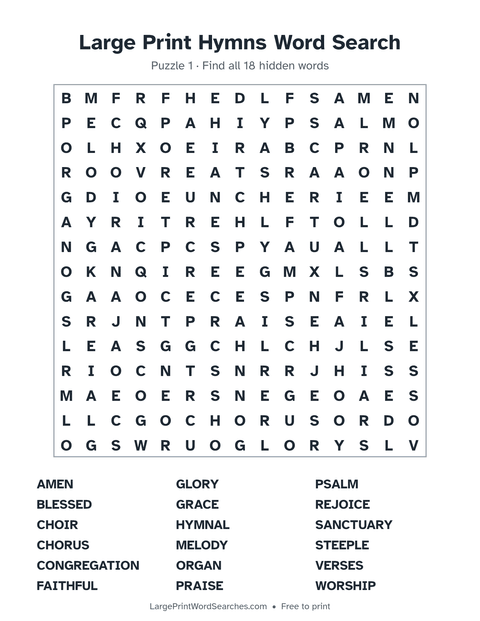
Large Print Hymns Word Search
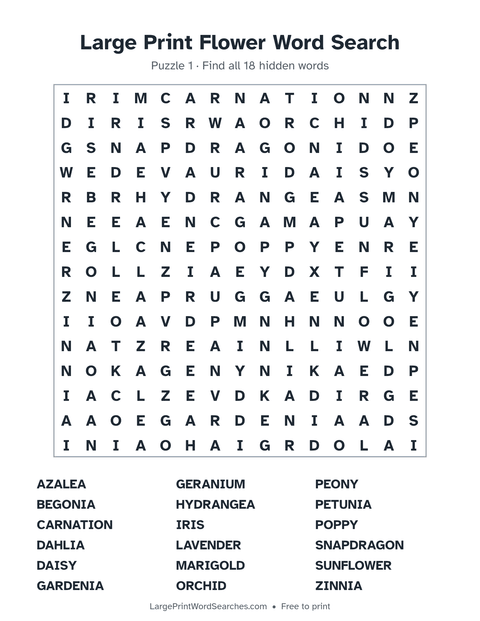
Large Print Flower Word Search
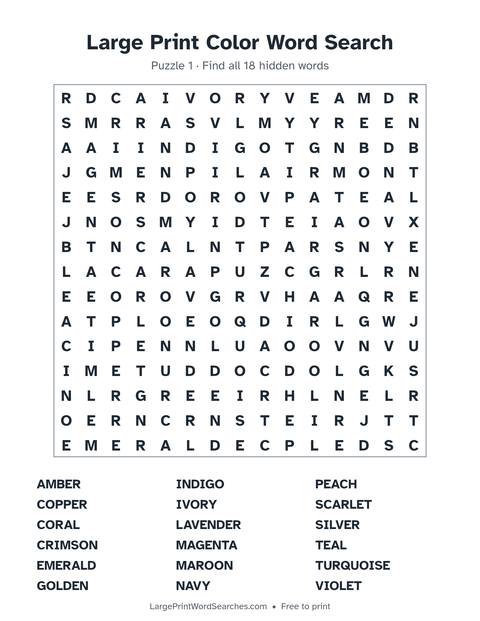
Large Print Color Word Search
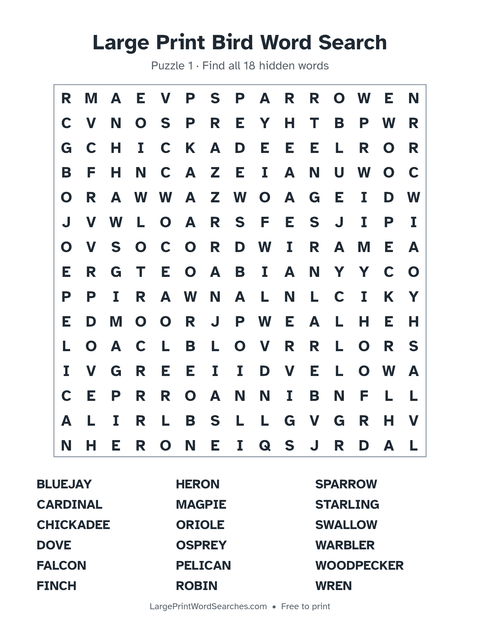
Large Print Bird Word Search
If the standard grids are too much
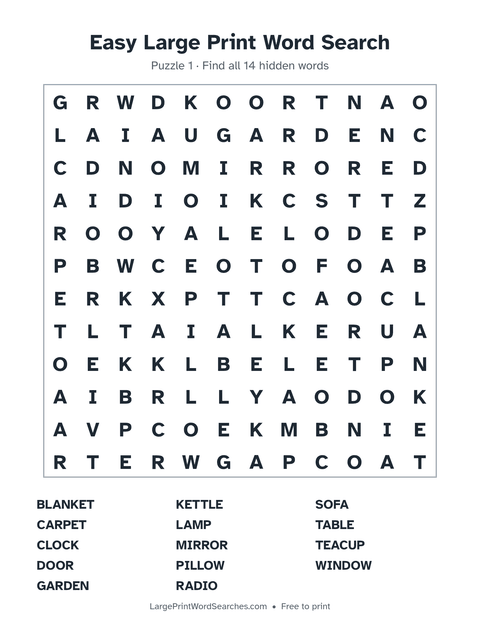
Difficulty is not really about intelligence here, it is about how many decisions the page asks for at once. The extra large print puzzle uses a 10×10 grid so there is simply less to scan. The easy puzzles run across and down only, with nothing backwards or diagonal — which removes the single most frustrating part of a word search for anyone whose visual tracking has changed.
How to use these at home
Print at 100% scale rather than "fit to page" — the latter quietly shrinks the grid and undoes the large print. One puzzle per page, never two, and print single-sided so there is nothing showing through.
Offer a highlighter instead of a pen. It marks a found word without hiding the letters underneath, so the page still looks complete rather than crossed out, and a shaky line does not matter.
Sit alongside rather than opposite, and read the word list aloud together first. Plenty of people who cannot scan a list can find a word beautifully once they have heard it. If a puzzle stalls, reading out the first letter and pointing at the right quarter of the grid is not cheating — finishing is the point, not difficulty.
Let an unfinished puzzle be finished. There is no benefit to the page being completed in one sitting, and a half-done grid left on the table is often picked back up.
For care homes and activity coordinators
Print and photocopy anything here as many times as you like — that is what it is for, and there is no licence to ask about. Every PDF carries its answer key as page two, so a folder of puzzles doubles as a folder of solutions for staff.
The month pages are built for exactly this: a fresh sheet for the activity calendar every month, with seasonal words that give the room something to talk about beyond the grid itself. If you run a dedicated unit, the memory care activities page lays the whole year out as a printable calendar.
This page is the printable end of things. For the wider range — household tasks, music, reminiscence, getting outside — see activities for dementia patients; for the things-you-play side, games for dementia patients.
Frequently asked questions
Are these dementia activities really free to print?
Yes — every puzzle is free to download, print and photocopy, with no sign-up, no watermark and no limit. Care homes, memory cafés, day centres and family carers are all welcome to use them.
What kind of activities work best for someone with dementia?
Calm, familiar and finishable ones. Activities built from long-held vocabulary — kitchens, gardens, hymns, family words — tend to land better than anything requiring new learning, and a task that can be completed gives a genuine sense of achievement. Large, high-contrast print matters enormously, because visual difficulty is often mistaken for cognitive difficulty.
Which puzzle should I print first?
The extra large print puzzle, or any of the familiar-words puzzles above in their easy form. Start easier than you think you need to: a puzzle finished with room to spare is a far better first experience than one abandoned halfway.
Do the printables include answers?
Every PDF includes the full answer key as page two, with each hidden word highlighted in the grid. Useful when someone asks whether a word is really in there — and it usually is.