Games for Dementia Patients
A good game for someone with dementia has three properties: it is familiar, it cannot really be lost, and it can be made easier without the person noticing. Surprisingly few games pass all three. This page is the ones that do — the printable ones this site makes, and the physical ones worth having in the cupboard.
Everything printable here is free, in letters about half an inch tall, with the answer key on page two. Everything else is a plain description of what works and why; there is nothing to buy from us.
Word searches that play like a game
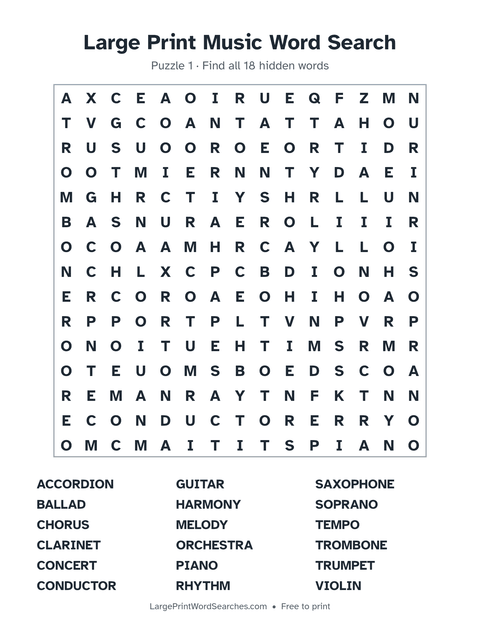
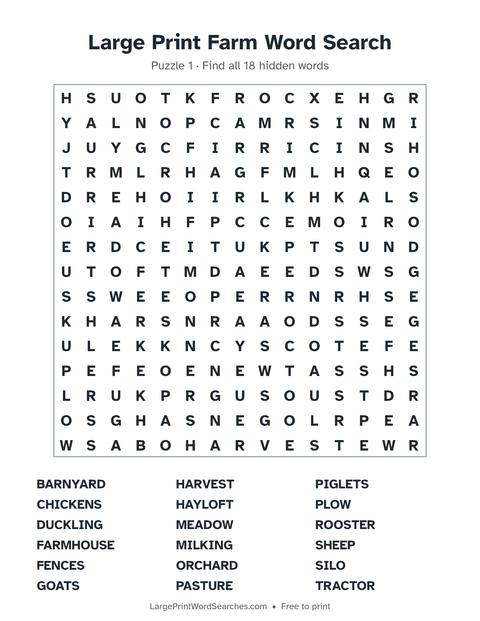
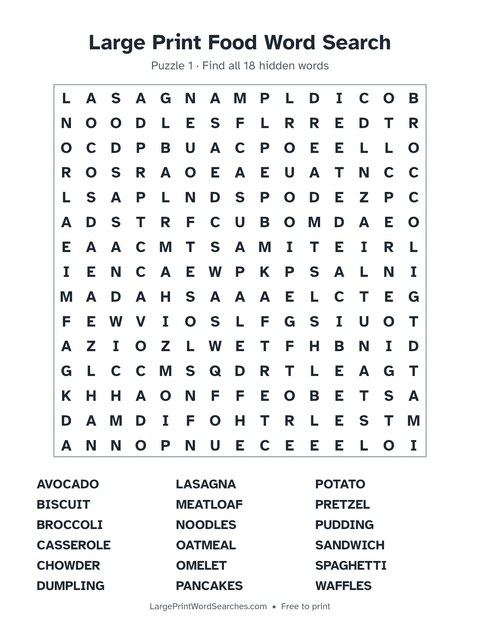
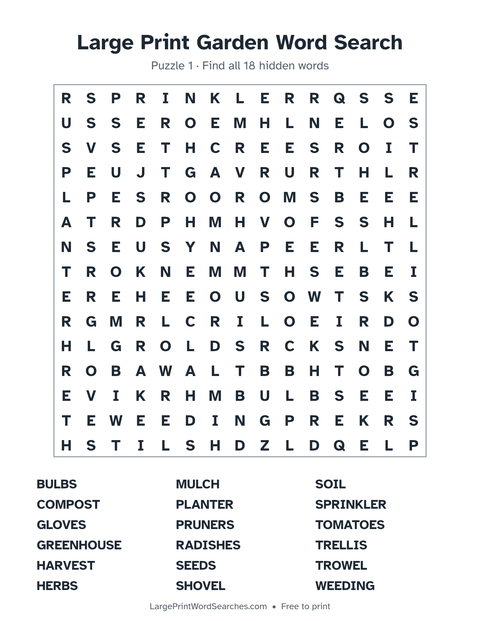
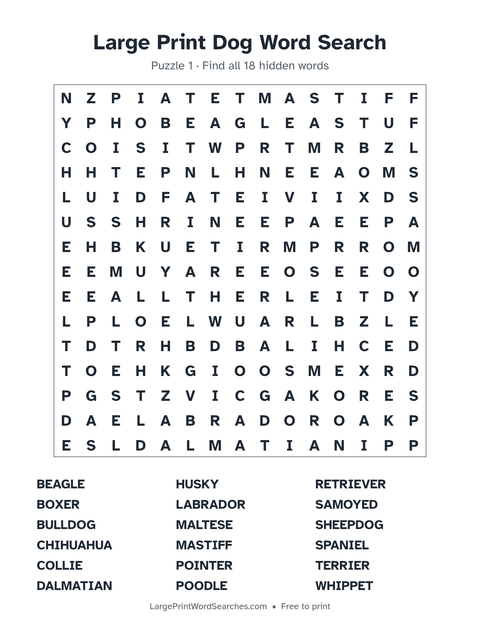
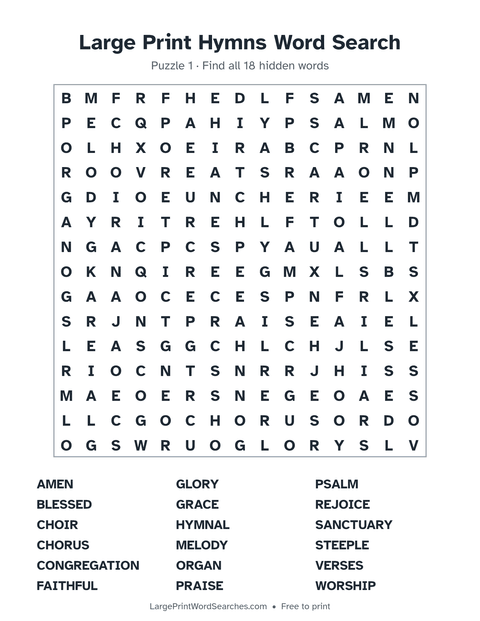
A word search is the rare puzzle where nothing is ever wrong — a word is either found or not yet found. Print two copies and it becomes a race; solve one sheet at a table with a shared highlighter and it becomes a team game. These four are the easiest to play that way.
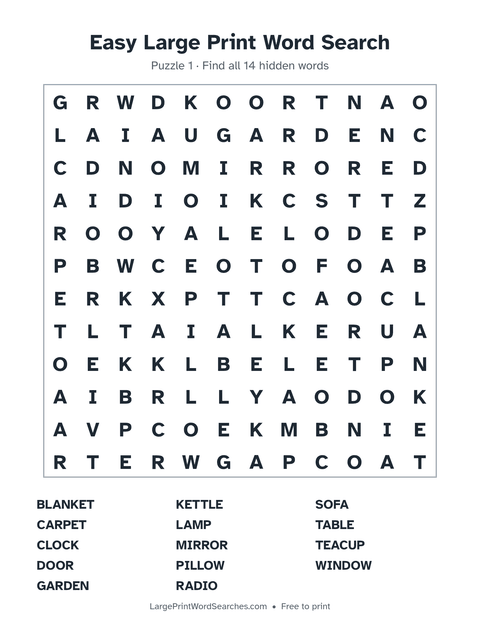
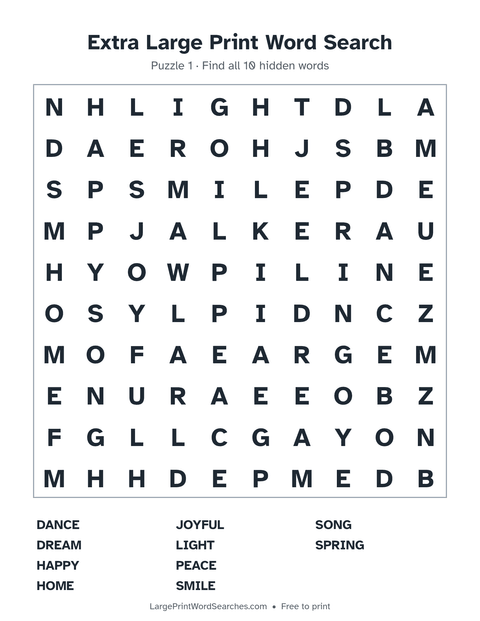
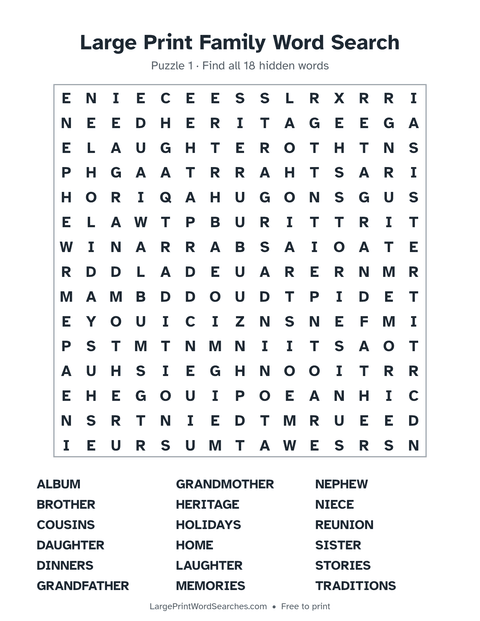
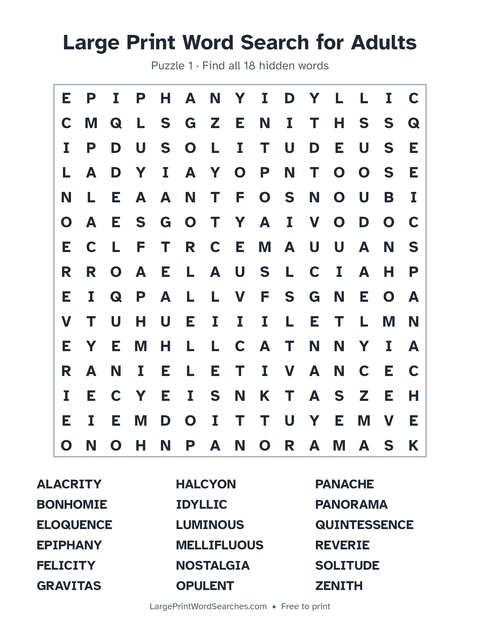
Themed grids that start a conversation mid-game
Half the value of playing together is what gets said while looking for the words. Themes built from long-held vocabulary do that best — a farm grid produces stories about a childhood farm, a music grid produces singing.
Sudoku, and why it belongs on the list
Sudoku is the other printable here, and it suits a different kind of person: someone who was never a word person but was always a numbers person, or who did the daily sudoku for twenty years. The large print sudoku for seniors page is the place to start, and the 6×6 easy sudoku is the gentle version — the same rules, half the cells, letters that print half again as large.
The way to make sudoku easier without changing the puzzle is to fill in a few more of the answers yourself before handing it over. A grid with twelve blanks is a five-minute game; the same grid with forty is an afternoon's frustration.
Physical games that hold up
Dominoes, with a standard double-six set and large spots. Matching by number is a skill that lasts, the pieces are satisfying to handle, and a game can be played cooperatively — building a line together — rather than competitively.
Card games, with large-print cards. Snap and pairs (turning cards face down and finding matches) both work well into later stages because they rely on recognition, not memory of rules. Rummy and whist survive for people who played them for decades, then quietly stop being fun; when that happens, go back to snap without comment.
Bingo, with a helper and a slow caller. It is social, the numbers are large, and the helper can point without it feeling like help. Picture bingo — matching images rather than numbers — takes it a stage further.
Large-piece jigsaws of familiar scenes, twenty to sixty pieces. Not children's puzzles: adult subjects, big pieces. Bean bag toss, skittles and balloon volleyball for anything that needs people out of chairs.
Making a game easier without saying so
Reduce the number of pieces, cards or words before the game starts, not during it. Six words crossed off a word-search list before printing; half the dominoes left in the box; pairs played with eight cards rather than twenty. The game looks the same and finishes sooner.
Play alongside rather than against. Building a domino line together, or hunting for the same word on the same sheet, removes the possibility of losing entirely. Most people prefer it anyway.
Say the rule out loud each turn if it helps, casually and every time — "match the number" — rather than expecting it to be remembered. And keep the same few games available for months. Familiarity is the point; novelty is the enemy.
What this page is not
It is not a list of games that improve memory or delay dementia. There is no evidence for that and you will not find the claim here. The reason to play a game with someone who has dementia is that it is a pleasant, companionable way to spend half an hour in which nothing can go wrong. That is enough.
For the broader range of activities beyond games — household tasks, music, getting outside — see activities for dementia patients. For how a word search itself can be adapted over time, see word searches for dementia patients.
Frequently asked questions
What are the best games for dementia patients?
Games built on recognition rather than memory: word searches, snap, pairs, dominoes, picture bingo and large-piece jigsaws. Each can be played cooperatively, none can really be lost, and all of them can be quietly made easier by using fewer pieces, cards or words.
Are word searches good for people with dementia?
Yes, as a calm and familiar activity — particularly in large print with long-familiar words, and particularly when played together rather than alone. They are not a treatment for dementia, and it is worth being clear about that.
Is sudoku suitable for someone with dementia?
For someone who always did sudoku, often yes, in large print and with more of the grid filled in than usual. The 6×6 version uses the same rules with far fewer cells. For someone who never did sudoku, a word search is usually the better choice; this is not the time for learning a new game.
Are these games free?
The word searches and sudoku on this site are free to download, print and photocopy, with no sign-up. The physical games mentioned are ordinary items — a dominoes set, large-print cards — described plainly; we do not sell them.
How do I stop a game feeling like a test?
Play alongside rather than opposite, remove the possibility of losing by playing cooperatively, keep the rule to one phrase said aloud each turn, and stop while it is still going well. Familiar games repeated over months beat new games every time.