Word Search Puzzles for Dementia Patients
A word search is one of the few puzzles that adapts gently as things change. The same page can be a brisk five-minute solve, a shared activity, or simply a calm thing to hold and look at — and none of those is a lesser use of it.
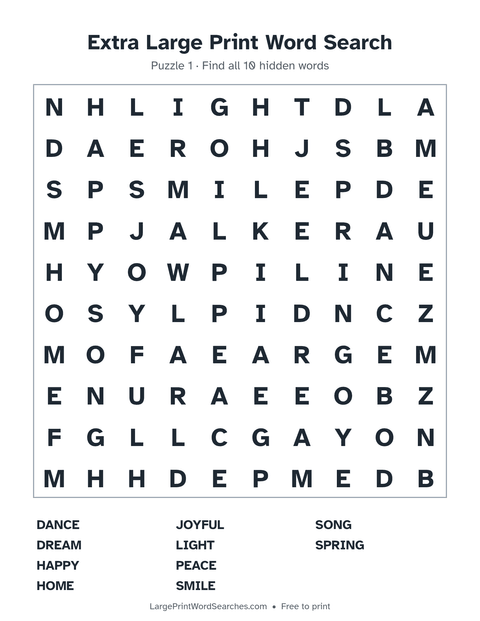
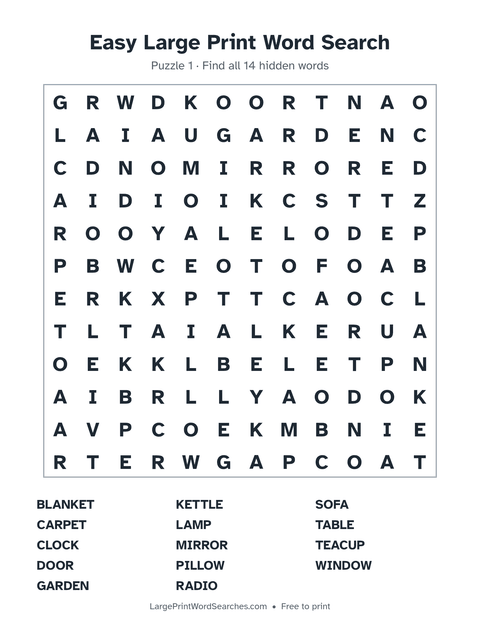
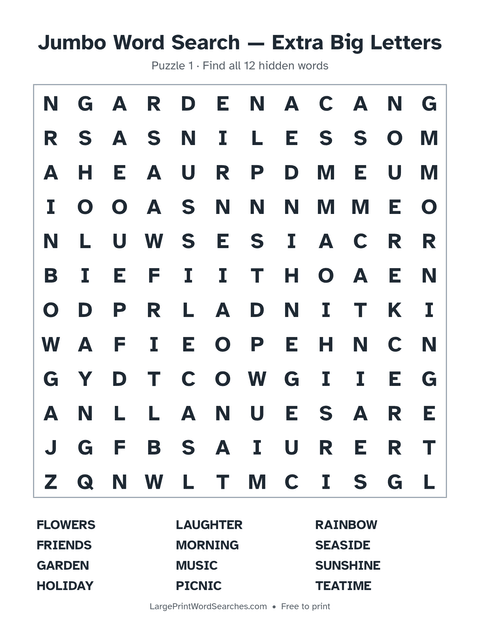
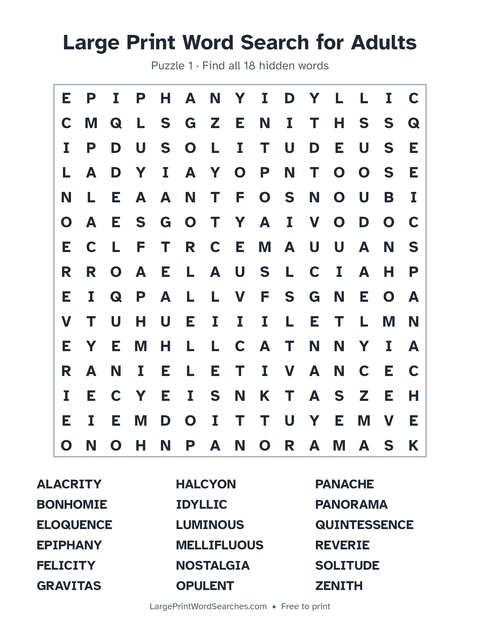
These are all set in letters about half an inch tall, in Atkinson Hyperlegible, the typeface the Braille Institute designed for low-vision readers. Free to print and photocopy, answer key included with every one.
Puzzles built from words people have known for decades
Long-familiar vocabulary stays accessible far longer than recently learned words, which is why these particular themes are the ones to reach for. They also give the room something to talk about — a sewing grid tends to produce stories about a mother's machine, and that conversation is worth more than the puzzle.
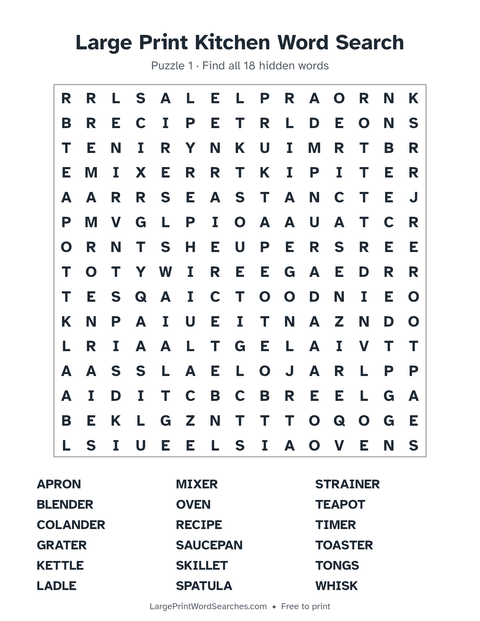
Large Print Kitchen Word Search
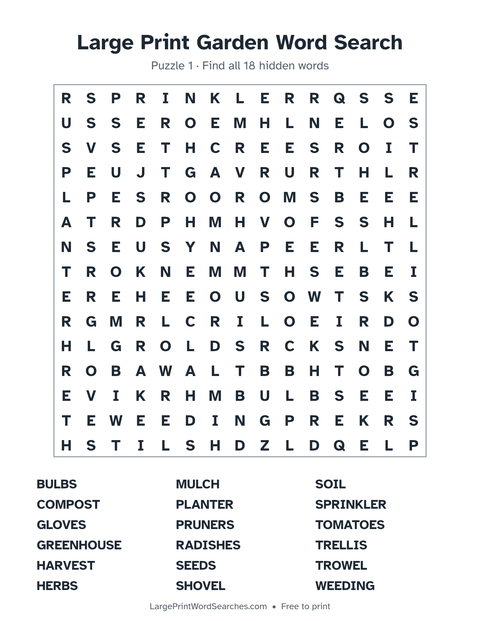
Large Print Garden Word Search
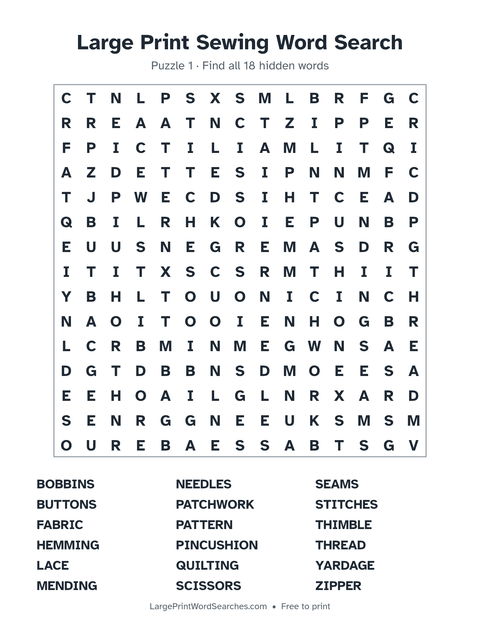
Large Print Sewing Word Search
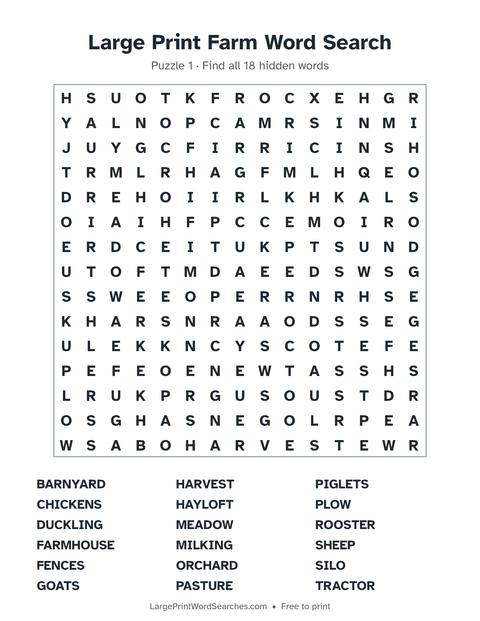
Large Print Farm Word Search
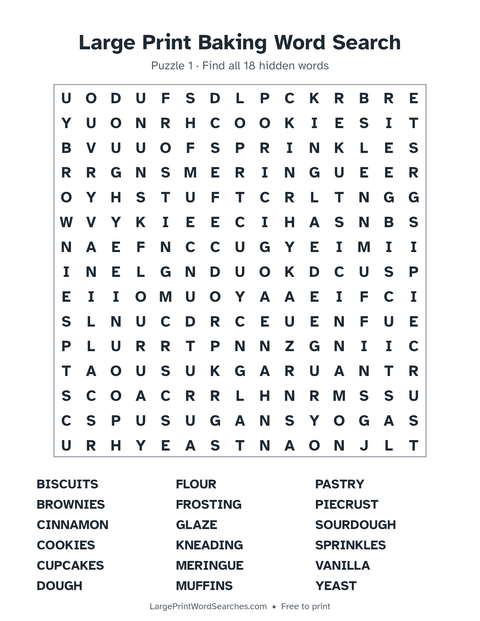
Large Print Baking Word Search
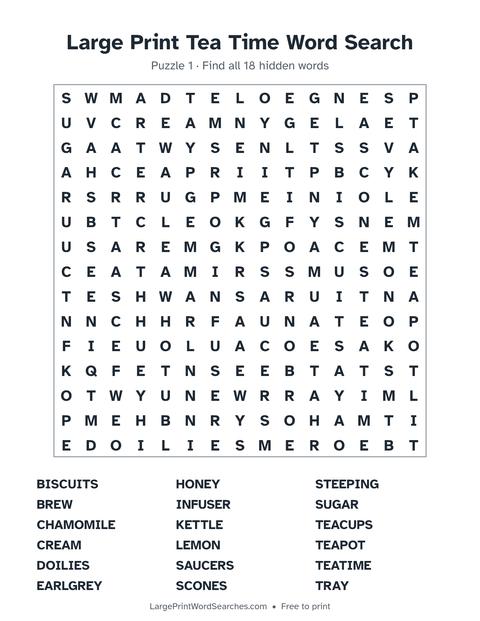
Large Print Tea Time Word Search
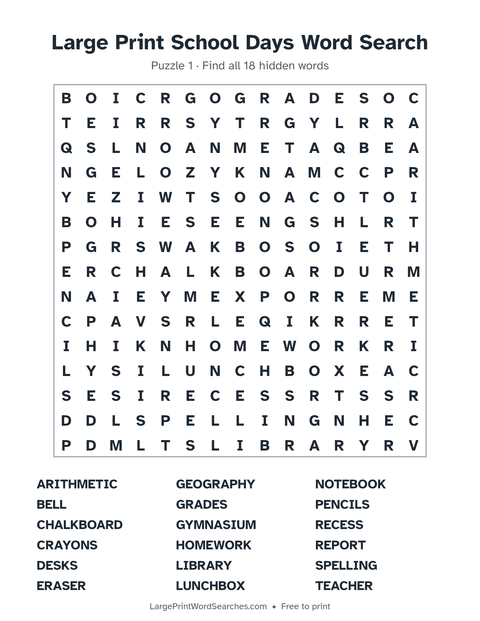
Large Print School Days Word Search
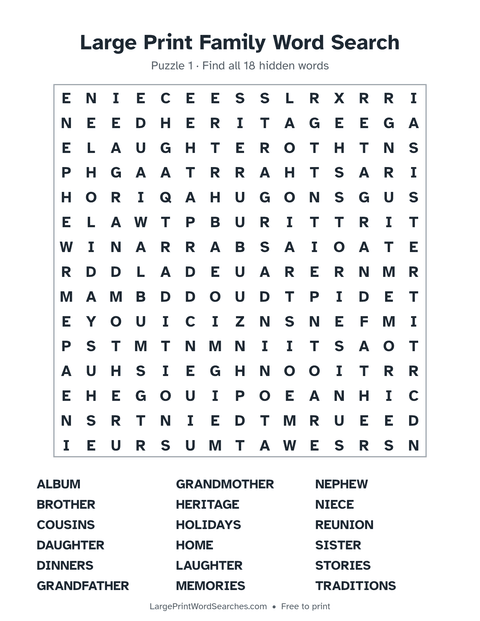
Large Print Family Word Search
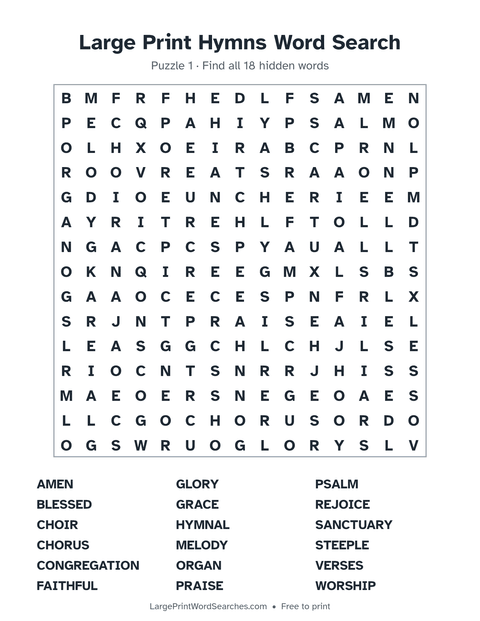
Large Print Hymns Word Search
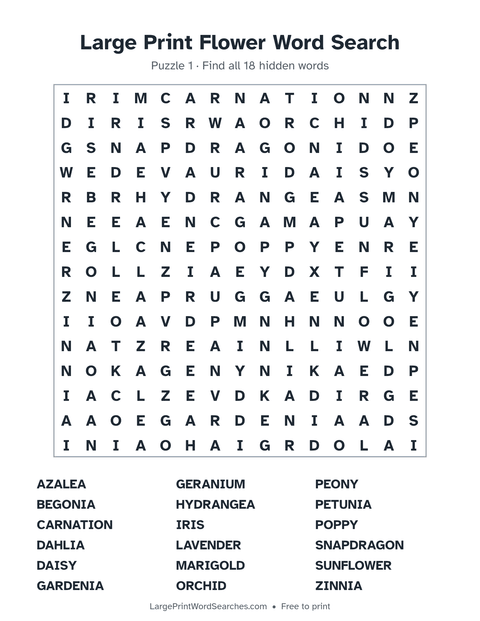
Large Print Flower Word Search
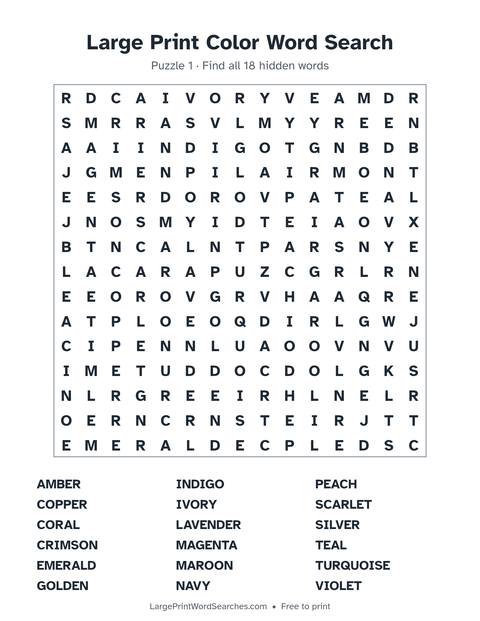
Large Print Color Word Search
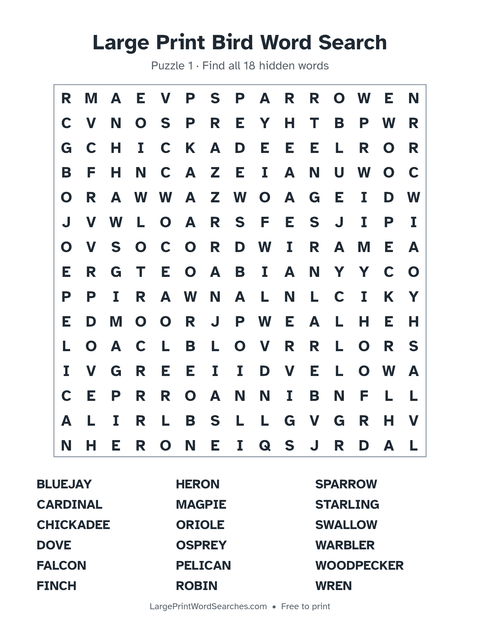
Large Print Bird Word Search
Gentler grids when the standard ones stop working
If a puzzle is being put down quickly, the problem is usually scanning load rather than interest. Fewer letters on the page, and words that only run across and down, fixes it more often than not.
How to adapt a word search as things change
Shrink the word list, not the grid. Cross off half the words before you print and ask for six instead of eighteen — the page still looks like a proper puzzle, but it finishes in a third of the time. This is the single most useful adaptation and almost nobody thinks to do it.
Move from finding to recognising. When scanning a grid becomes too much, the word list on its own is still a good activity: read it aloud and talk about each one. A list of kitchen words is a conversation, not just a puzzle component.
Use the answer key openly. Page two of every PDF shows each word highlighted. Handing someone the finished version to look at, or using it to point out the first letter, keeps the activity pleasant instead of testing.
Keep the same puzzle available more than once. Repetition is not a failure here — a familiar page is often more welcome than a new one, and nobody minds having found GARDENGATE before.
A note on what word searches can and cannot do
Puzzles like these are worth doing because they are calm, companionable and satisfying to finish. We are not going to tell you they slow the progression of dementia — the evidence for that is not there, and you deserve a straight answer rather than a sales pitch.
What they reliably offer is a good twenty minutes: something to do together that carries no risk of getting it wrong, in print large enough to be read without strain.
Frequently asked questions
Are word searches good for people with dementia?
They can be very good, as a calm and familiar activity that is satisfying to complete — particularly when the words are long-familiar ones and the print is large. They are not a treatment, and it is worth being clear-eyed about that; the value is in the pleasant, pressure-free time spent, not in an expected clinical benefit.
What size grid works best?
Start with a 10×10 extra large print grid, or an easy puzzle where words run across and down only. If that is finished comfortably, move up. It is far better to step up from something easy than to step down from something that felt like a failure.
How do I make a puzzle easier without printing a different one?
Cross some words off the list before you hand it over — six words out of eighteen makes a genuinely easy puzzle out of a standard one, without the page looking any different. You can also read the list aloud together first, or point out the rough area of the grid.
Can I print these for a care home or memory café?
Yes, freely and in any quantity. Every PDF includes its answer key as page two, which makes building a reusable activity folder straightforward.